Posts Tagged ‘high vocabulary’
Posted by kazvorpal on October 9, 2009
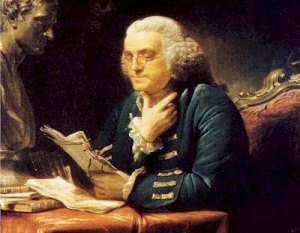
Ben Franklin may be best known for the apothegms he printed in Poor Richard's Almanac, such as "apenny saved is a penny earned", and "haste makes waste".
Apothegm archaic sp: Apophthegm
n. A short witty instructive saying; an aphorism or maxim.
Ben Franklin may be best known for the apothegms he printed in Poor Richard’s Almanac. Julius Caesar did write a collection of apophthegms, as appears in an epistle of Cicero, so did Macrobius, a consular man…they are mucrones verborum, pointed speeches. “The words of the wise are as goads,” saith Solomon. Cicero prettily calleth them salinas, salt-pits, that you may extract salt out of, and sprinkle where you will. — Francis Bacon, “Apophthegms, New and Old” (1625) Etymology As these ten dollar words often are, this one has a neoclassical, Renaissance origin: “To speak plainly”, in Ancient Greek: apo: from; phthengesthai: to speak
Posted in Knowledge, rhetoric | Tagged: aphorisms, apophthegms, apothegms, bacon, ben franklin, francis bacon, high vocabulary, quotations, quotes, sayings, vocabulary, vocabulary words, word, word of teh day, word of the day, wotd | 1 Comment »
Posted by kazvorpal on October 8, 2009
 Cosset
v. To coddle like a pet; to overly indulge; pamper
The things we call aristocracies and reigning houses are the last places to look for masterful men. They began strongly, but they have been too long in possession. They have been cosseted and comforted and the devil has gone out of their blood.
— John Buchan, The Path of the King (1921)
Etymology
From the same root as “kiss”, in Old English “Cossetung” meant “kissing”.
Posted in treatment | Tagged: aristocracy, coddle, cosset, high vocabulary, pamper, pampering, royalty, spa, vocabulary, word of the day, words, wotd | Leave a Comment »
Posted by kazvorpal on October 7, 2009
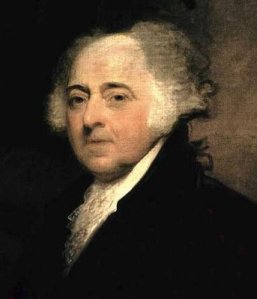
We may appeal to every page of history we have hitherto turned over, for proofs irrefragable, that the people, when they have been unchecked, have been as unjust, tyrannical, brutal, barbarous and cruel as any king or senate possessed of uncontrollable power. -- John Adams
Irrefragable
adj. Which cannot be refuted; indisputable, clearly right, incontrovertible.
We may appeal to every page of history we have hitherto turned over, for proofs irrefragable, that the people, when they have been unchecked, have been as unjust, tyrannical, brutal, barbarous and cruel as any king or senate possessed of uncontrollable power.
— John Adams, Letter to Thomas Jefferson (11-13-1815)
Etymology
Neoclassical Latin, refragari means “to oppose or contest”, the Latin frag means to break, as in fragment and fraction. Same Indo-European root as “break”.
Posted in Knowledge, rhetoric | Tagged: debate, english, high vocabulary, irregragable, john adams, latin, lexicon, proof, refragari, rhetoric, vocabulary, word of the day, wotd | Leave a Comment »
Posted by kazvorpal on October 6, 2009
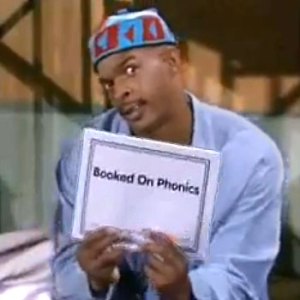
That's why I've cremated this new program called "Booked on Phonics". I'll teach you how to testiculate my way. To computate how it works, I will intersects with a perverted deviant by using one of my own penal implants.
Sesquipedalian
n. A person who uses long words, or a long word, itself.
usage
A pseudointellectual often tries to be sesquipedalian, but is not sufficiently pedantic to know how the words should actually be used. (As with the famous Damon Wayans sketch, at right)
etymology
Roman poet Horace coined the term while mocking words “a foot and a half long”; sesqui – “half again”, pedi – “foot”. The full phrase was actually sesquipedalia verba.
Posted in rhetoric | Tagged: high vocabulary, horace, lexicon, polysyllabic, pseudointellectual, sesquipedalia verba, sesquipedalian, vocabulary, words | Leave a Comment »
Posted by kazvorpal on October 4, 2009
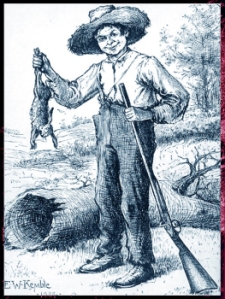
We said there warn't no home like a raft, after all. Other places do seem so cramped up and smothery, but a raft don't. You feel mighty free and easy and comfortable on a raft.
Solecism (plural Solecisms)
n. A grammatical mistake or absurdity, or even simply a non-standard language usage.
- We don’t need no education! (Pink Floyd’s infamous double-negative self-refutation.)
- This is just between you and I. (Hypercorrection to avoid the common, nonstandard “you and me” form in the subject of sentences…in this case, “me” would have been correct, the standard pronoun for the object of a preposition.)
- Surely there is no fitter solecistic archetype than Huck Finn. (While fitter is a valid construction, the grammatical norm in English is to say “more fitting” — an example of how valid language can still be a solecism.)
Etymology:
In ancient Greece, the colony of Soli in Sicily spoke a very corrupted version of Greek, and came to be seen as a model of silly language usage.
Posted in Grammar / Syntax | Tagged: absurdity, dictionary, english, grammar, high vocabulary, huck finn, huckleberry finn, language, lexicography, lexicon, pink floyd, solecism, soli, syntax, thesaurus, vocabulary, words | 1 Comment »
Posted by kazvorpal on October 3, 2009
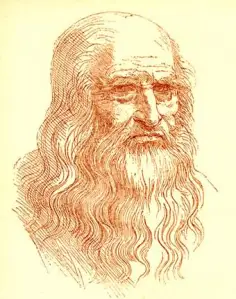
We deliberated between da Vinci, Ben Franklin, and Samuel Clemens as the quintessential autodidact
Autodidact (plural: autodidacts)
n. A self-taught person; an automath.
Having taught himself more about the sciences than any teacher of his age already knew, Leonardo Da Vinci is one of the greatest autodidacts.
Etymology
Posted in Knowledge | Tagged: autodidact, autodidactism, da vinci, education, english, high vocabulary, Knowledge, language, learning, lexicon, pithiness, renaissance man, rhetoric, verbosity, vocabulary, words | 1 Comment »


 High-Vocabulary Word of the Day